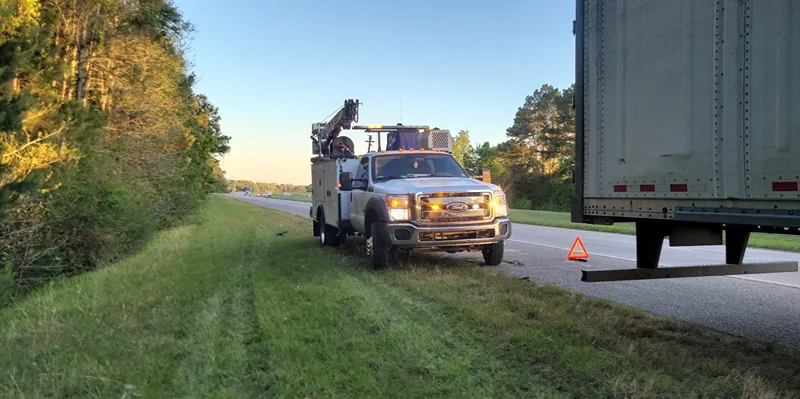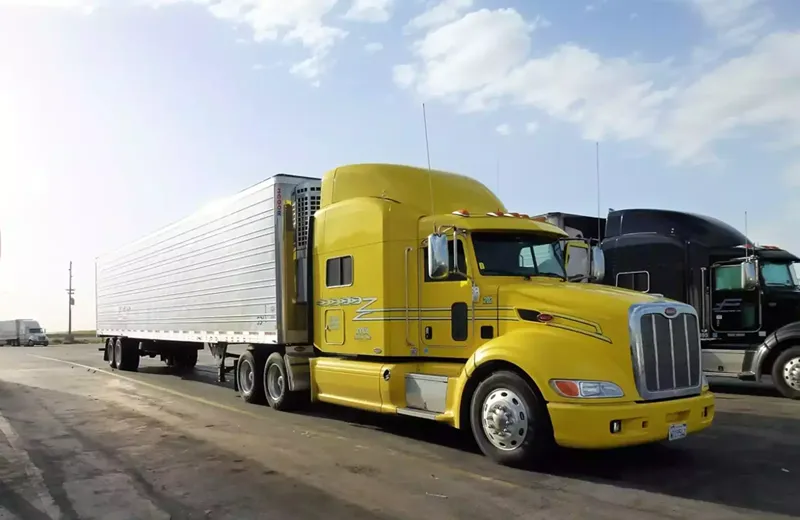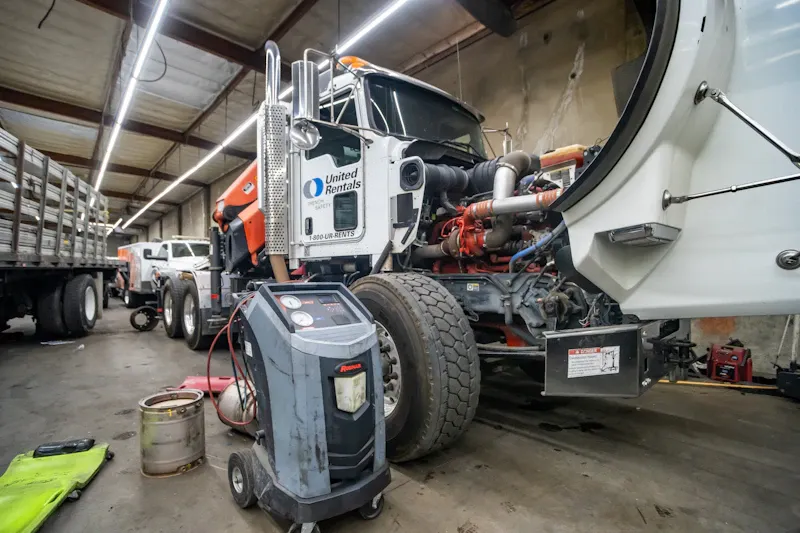
Your loaded semi-truck starts losing power halfway up Sherman Hill, and suddenly, maintaining highway speed becomes a struggle. Before blaming the engine or scheduling a performance tune, consider what your truck's computer is telling you. Diesel ECM diagnostics services help identify whether turbocharger problems, fuel restrictions, faulty sensors, or an active engine derate are responsible for reduced performance.
Why Do Diesel Trucks Lose Power on I-80 Near Cheyenne?
Interstate 80 presents some demanding operating conditions for commercial trucks travelling through southeastern Wyoming. The climb toward Sherman Hill and the I-80 Summit, approximately 8,640 feet above sea level, places sustained demands on engines hauling heavy freight.
At higher elevations, reduced air density affects combustion and turbocharger operating conditions. Combine that with steep grades, heavy payloads, and extended engine loads, and problems that barely register on level highways can suddenly become impossible to ignore.
However, altitude alone doesn't mean your ECM needs recalibration. Modern diesel engines use manufacturer-designed control strategies to account for changing operating conditions.
How Does Sherman Hill Expose Existing Engine Problems?
Long climbs demand consistent airflow, fuel delivery, and cooling performance. If any of these systems cannot meet engine requirements, your truck may hesitate, accelerate poorly, or trigger an engine-protection strategy.
Common warning signs include:
- Noticeably weaker acceleration while climbing grades.
- Engine warning lights appearing under heavy loads.
- Unexpected reductions in available torque.
- Excessive coolant temperatures during sustained climbs.
- Intermittent power loss that disappears on flatter roads.
If your diesel truck losing power complaint occurs repeatedly between Cheyenne and Laramie, record when the symptoms develop. That information helps technicians reproduce the problem and identify its source.
Can Turbocharger and Fuel-System Problems Cause Engine Power Loss?
Absolutely. Two common causes of reduced diesel engine performance involve insufficient turbocharger boost and inadequate fuel delivery.
Both problems can become more noticeable when Class 8 tractors operate under sustained loads.
Turbocharger Boost and Intake Sensor Faults
Your turbocharger supplies compressed air to support efficient diesel combustion. When boost pressure falls below the engine's commanded target, the ECM may reduce available fuel or power.
During turbo boost diagnostics, technicians investigate several potential problems:
- Damaged charge-air cooler connections or leaking intake hoses.
- Faulty manifold absolute pressure (MAP) sensors.
- Turbocharger actuator or control problems.
- Restricted intake components.
- Differences between commanded and actual boost pressure.
A cracked charge-air hose can produce symptoms resembling a turbocharger failure. Checking airflow and pressure readings before replacing major components helps prevent unnecessary repair expenses.
Fuel Pressure and Delivery Restrictions
Fuel delivery matters just as much as airflow. Restricted filters, inadequate supply pressure, or malfunctioning fuel-system components can prevent your engine from producing the power needed for steep climbs.
Professional diesel fuel pressure testing helps determine whether the engine receives sufficient fuel under operating conditions.
Technicians may evaluate supply pressure, fuel filtration, rail-pressure readings where applicable, and injector performance. If actual fuel pressure consistently falls below commanded pressure, further testing can isolate the restriction or component failure.
How Do ECM Sensors, Fault Codes, and Calibration Issues Trigger Derates?
Your engine control module continuously monitors operating conditions and manages systems such as fuel injection, turbocharger control, and engine protection.
When the ECM identifies certain abnormal conditions, it may initiate a heavy-duty truck engine derate to reduce the risk of damage or respond to an emissions-system fault.
Not every derate means the ECM itself has failed.
What Does Professional ECM Diagnostic Testing Involve?
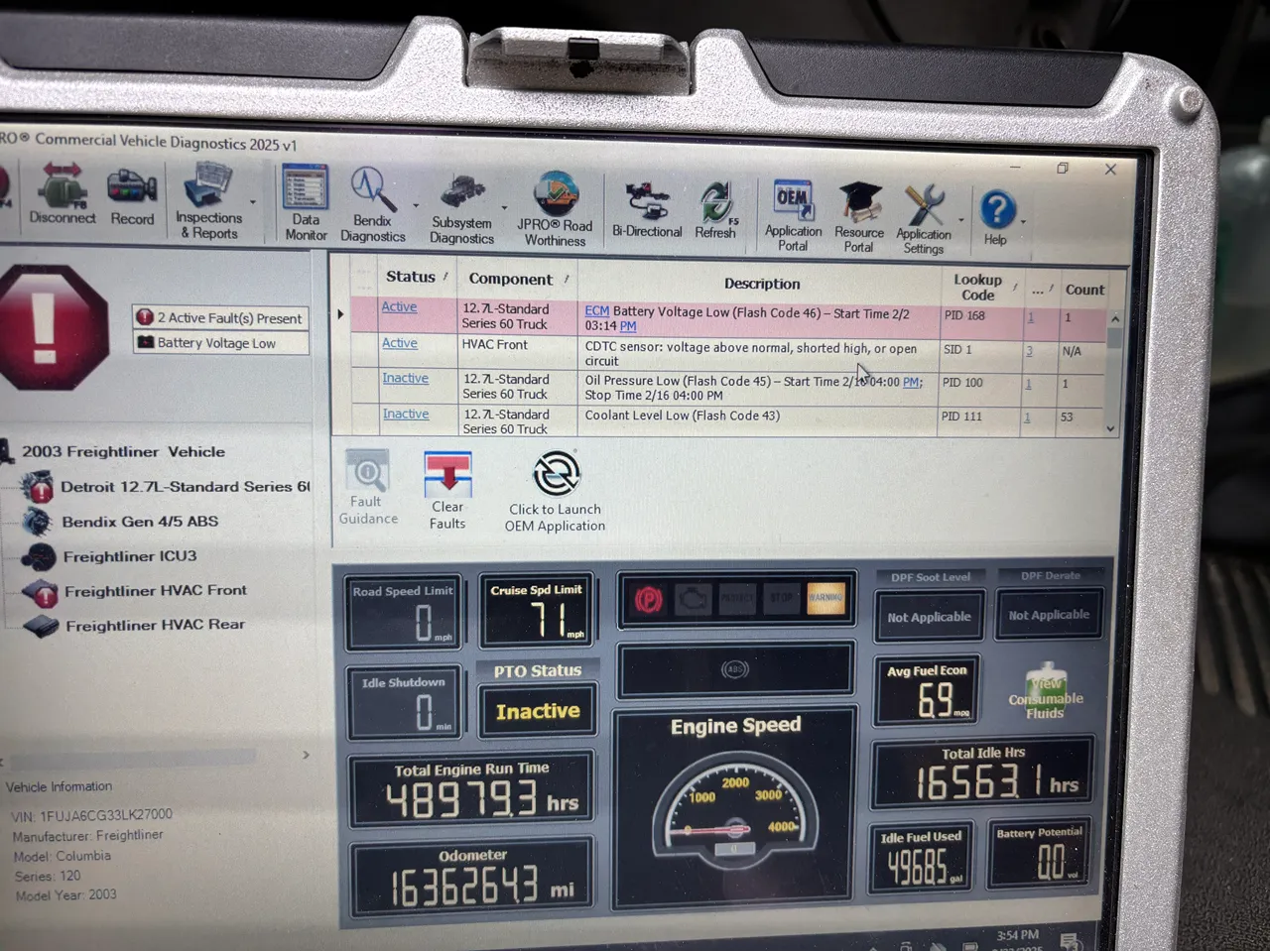
Effective semi-truck ECM diagnostics go beyond connecting a scanner and reading a fault code.
A technician typically follows a structured diagnostic process:
- Retrieve diagnostic trouble codes: Identify active and inactive faults and review available operating snapshots.
- Analyze live engine data: Compare actual readings with manufacturer-specified operating values.
- Check communication networks: Investigate J1939 communication faults and module connectivity.
- Inspect electrical components: Test ECM power supplies, grounds, connectors, and related wiring.
- Verify the underlying problem: Perform targeted mechanical or electrical tests before recommending repairs.
This process distinguishes genuine ECM problems from faulty inputs, wiring defects, and mechanical failures.
For example, an incorrect coolant-temperature signal could cause the ECM to respond to an overheating condition that doesn't actually exist. Confirming the sensor reading against the engine's real temperature prevents misdiagnosis.
When Is Diesel ECM Programming Necessary?
Diesel ECM programming may be appropriate when manufacturer service information identifies a required software correction, calibration update, or module replacement procedure.
However, reprogramming cannot repair a leaking intake system, restricted fuel filter, or damaged wiring harness.
If you're considering diesel ECM tuning, prioritize identifying existing faults before discussing performance changes.
Any calibration changes must also preserve required emissions controls. The federal Clean Air Act prohibits tampering with emissions systems, including software modifications that defeat required monitoring or emissions-control functions.
Can DPF, SCR, and DEF Problems Cause Diesel Engine Derates?
Yes. Modern diesel aftertreatment systems can trigger reduced-power conditions when the ECM detects certain emissions-related failures.
Your diesel particulate filter (DPF), selective catalytic reduction (SCR) system, and diesel exhaust fluid (DEF) delivery components work together to manage exhaust emissions.
Common causes of diesel aftertreatment system faults include malfunctioning exhaust-temperature sensors, excessive DPF restriction, incorrect DEF delivery, and faulty NOx sensors.
How Are Emissions-Related Derates Diagnosed?
Technicians use DPF and SCR diagnostics to examine aftertreatment fault codes and operating data.
Depending on the engine and fault, testing may include:
- DPF differential-pressure measurements.
- Exhaust-temperature sensor readings.
- DEF quality and dosing-system performance.
- Upstream and downstream NOx sensor data.
- Regeneration history and manufacturer-defined derate conditions.
A regeneration procedure isn't automatically the right solution for every DPF warning. Technicians must first determine whether the underlying fault prevents safe or successful regeneration.
Clearing codes without correcting their causes can also allow warnings and power restrictions to return.
How Do October Weather Conditions Affect Diesel Diagnostics in Cheyenne?
October brings cooler mornings and changing mountain weather to the Cheyenne–Laramie corridor. National Weather Service climate normals place Cheyenne's average October high near 59°F and average low near 34°F.
These conditions make cold-start diesel diagnostics particularly valuable before dispatching trucks westbound on I-80.
Cold temperatures can expose weak batteries, poor electrical connections, inaccurate temperature sensors, and existing fuel-system problems.
Meanwhile, sustained climbs toward the I-80 Summit place additional demands on engine cooling and airflow systems.
Before dispatch, check for warning lights, inspect accessible hoses and fluid levels, and report unusual starting behaviour. Always review current WYDOT road and weather advisories independently of the truck's mechanical condition.
When Should You Schedule Professional ECM Diagnostics in Cheyenne, WY?
Don't wait for a complete breakdown before investigating recurring engine-power problems.
Schedule truck ECM repair Cheyenne diagnostic services when your truck repeatedly experiences reduced acceleration, active engine warnings, unexplained derates, or inconsistent power delivery.
For fleets operating along I-80 and connecting north or south through I-25, early diagnosis helps avoid unexpected disruptions to delivery schedules.
When arranging service, provide the technician with your engine make, model, fault codes, and a description of the operating conditions when symptoms appeared.
For instance, knowing that a loaded tractor loses power exclusively during sustained uphill acceleration can narrow the diagnostic possibilities considerably.
Accurate diagnostics identify whether your truck needs a fuel-system repair, sensor replacement, electrical correction, aftertreatment service, or a compliant ECM software update.
Keep Your Diesel Truck Running Strong Along I-80
Engine power loss doesn't automatically mean you need a new ECM or performance tune. Turbocharger defects, fuel restrictions, sensor inaccuracies, and aftertreatment faults can all produce similar symptoms.
The right diagnostic approach identifies the underlying issue before unnecessary repairs begin.
Contact our team at Patriot Diesel at 307-635-2354 for diesel ECM diagnostics in Cheyenne, WY. Discuss your engine warning lights, power-loss symptoms, or recurring derates and determine the appropriate next steps before your next trip across Sherman Hill.
FAQs
What causes a diesel engine to derate while driving?
A diesel engine may derate because of overheating, abnormal sensor readings, fuel-system faults, turbocharger problems, or emissions-system failures. The ECM reduces power under certain conditions to protect components or enforce manufacturer-defined operating restrictions.
Can diesel ECM diagnostics fix a truck that loses power uphill?
ECM diagnostics can identify the cause of uphill power loss, but repairs depend on the findings. Technicians may uncover insufficient boost, inadequate fuel pressure, sensor defects, or an active engine derate that requires further repair.
Does high altitude require diesel ECM tuning?
Not necessarily. Modern diesel ECMs already incorporate operating strategies for changing environmental conditions. A truck losing power at high altitude should undergo mechanical and electronic diagnostics before technicians consider calibration changes.
How long does diesel ECM diagnostic testing take?
Diagnostic time depends on the fault's complexity, available service information, and whether technicians can reproduce the symptoms. Straightforward faults may be identified during initial testing, while intermittent electrical or performance issues may require additional investigation.
Can clearing engine fault codes remove a diesel derate?
Clearing fault codes does not correct the underlying problem. Some derates remain active or return until technicians repair the cause and complete any manufacturer-required verification or reset procedures.