A tractor can stop smoothly and still hide a problem behind the cab. After months of loaded summer runs, the trailer may be braking harder—or barely contributing—while everything feels reasonably normal from the driver's seat.
That is why an end-of-season tractor-and-trailer brake check should treat the combination as one braking system. Comparing both sides can uncover uneven wear, air loss, hot wheel ends, and recurring faults before fall freight schedules put them to the test.
Why Compare Tractor and Trailer Brake Wear Together?
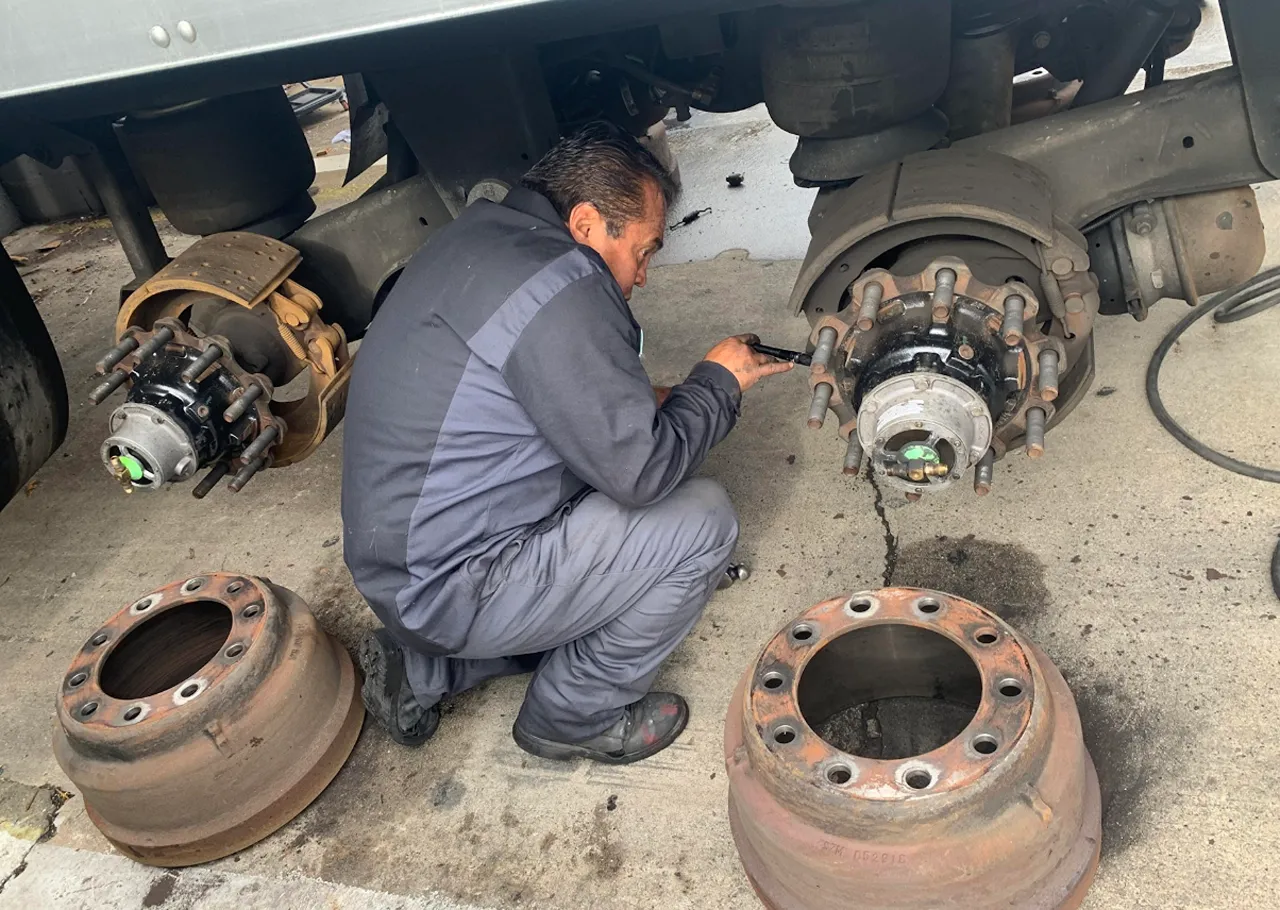
Start with friction components on both halves of the combination. A thorough heavy-duty brake inspection should compare lining or pad thickness, drum condition, contamination, heat damage, and uneven wear rather than evaluating the tractor in isolation.
The difference matters. If the trailer brakes contribute too much, trailer components may wear faster and generate excessive heat. If they contribute too little, the tractor brakes may carry more of the stopping load.
Look for:
- Different wear rates between tractor and trailer
- Cracked, damaged, or heat-affected drums
- Thin or uneven brake linings
- Oil, grease, or other contamination on friction surfaces
- Discoloration or other evidence of excessive heat
- Noticeably different conditions from one wheel end to another
For Class 8 tractors, dry vans, reefers, flatbeds, and other loaded combinations working around Cheyenne, these comparisons help technicians see the bigger picture instead of replacing one worn component and calling the job finished.
What Air-System Problems Should You Check After Summer Freight Runs?
Compressed air activates the brakes on heavy-duty trucks, making air brake system inspection a major part of an end-of-summer check. Air travels through lines to the service chamber, where pressure moves the diaphragm and pushrod, which then act through the slack adjuster and braking hardware.
Inspect air lines, fittings, glad hands, chambers, valves, tractor protection components, and trailer connections for damage and leakage. Rubber components and connections that have spent months working through heat, vibration, and high mileage deserve a close look.
Driver complaints provide useful clues. Pay attention when drivers report:
- Air pressure dropping faster than expected
- Frequent compressor cycling
- Audible leaks after parking
- Slow pressure buildup
- Brakes that release slowly
A recurring air brake leak or pressure complaint deserves diagnosis. Drivers should not have to adapt to an air system that behaves differently every week.
Why Do Hot Wheel Ends Need Further Diagnosis?
One wheel end running substantially hotter than the others is a clue, not a diagnosis. A hot wheel end may result from a dragging brake, adjustment problem, bearing issue, sticking component, or uneven brake application.
Bearings deserve particular attention because increased friction can create substantial heat at the wheel assembly. The industry reference material also identifies overheating as an important symptom associated with bearing problems.
The useful question is comparative: Why is this wheel end hotter than the others under similar operating conditions? That temperature difference gives technicians a starting point for finding the underlying problem.
What Should Technicians Inspect Around Brake Chambers and Adjustment?
Brake chambers convert air pressure into mechanical movement. On drum-brake systems, that movement travels through the pushrod and slack adjuster before rotating the S-cam and applying the brake shoes against the drum.
A brake chamber inspection should include chamber condition, pushrod travel, mounting hardware, slack adjusters where applicable, and evidence of uneven application. Technicians should also compare operation across wheel ends rather than checking components individually.
Repeated adjustment trouble deserves more than another adjustment. Excessive travel or recurring out-of-adjustment conditions can signal wear or another component problem that needs to be identified.
Why Should Trailer Brakes Get Their Own Inspection?
Trailers can carry faults from one run—and one tractor—to the next. That makes a separate trailer brake inspection particularly useful for Cheyenne fleets that regularly swap trailers among tractors and drivers.
Check trailer linings, drums, chambers, air lines, ABS components, electrical connections, and wheel ends. Record recurring defects by trailer number so patterns do not disappear when equipment assignments change.
Fleet managers should ask a simple question: Does the same trailer keep showing up in brake complaints?
If several drivers report pushing, unusual stopping feel, ABS warnings, or heat from the same trailer, the pattern can help technicians narrow the diagnosis.
What Do Tractor and Trailer ABS Warnings Tell You?
An ABS warning deserves investigation even when normal service braking still seems acceptable. Inspect tractor ABS warnings, the trailer ABS lamp, wheel-speed sensors, wiring, connectors, and recurring ABS fault codes.
A damaged connection or sensor problem can produce an intermittent warning that disappears and returns later. Clearing the warning without finding its cause does not correct the underlying fault.
Keep records when faults repeat. Knowing whether the same code, wheel position, trailer, or operating condition is involved can shorten diagnostic time.
Does Pulling Under Braking Always Mean a Brake Problem?
No. A truck that pulls during braking may have uneven brake application or contaminated friction material, but tires, alignment, suspension wear, or dragging components can create similar symptoms.
That distinction matters for regional fleets running loaded combinations along I-80, I-25, and throughout Southeast Wyoming. With highway mileage, heavy loads, and Wyoming wind exposure in the mix, predictable braking and stable chassis behavior are especially valuable.
Instead of replacing brake parts based solely on the driver's description, technicians should use that description to guide a broader commercial truck brake diagnosis when necessary.
What Should Drivers Report Before the Brake Inspection?
Drivers spend hours with the equipment, so their observations can provide diagnostic clues that a stationary inspection may not immediately reveal. Before the combination enters the shop, ask whether they noticed longer stopping distances, pulling, falling air pressure, brake noise, ABS lights, slow brake release, a hot smell near one wheel, a trailer that seems to push the tractor, or a different braking feel while loaded.
Those details help connect shop findings with what happens on the road. For fleets moving through the Cheyenne logistics area and the I-80/I-25 junction, documenting driver complaints by tractor and trailer number can also reveal repeat offenders.
Schedule a Complete Brake Check Before Fall Freight Picks Up
Summer freight work can leave behind high mileage, heat cycles, friction wear, air-system deterioration, and repairs that were postponed to keep equipment moving. A complete tractor-and-trailer brake check gives your fleet a chance to identify those issues while the equipment is in the shop instead of waiting for a fall road call.
Our team at Patriot Diesel Service can inspect the tractor and trailer together, investigate recurring brake and air-system complaints, and help identify uneven wear, hot wheel ends, adjustment problems, and warning-system faults. Call 307-635-2354 to schedule an end-of-summer brake inspection for your Cheyenne-area fleet before the next busy freight cycle.
FAQs
Why should tractor and trailer brakes be inspected together?
Tractor and trailer brakes share the job of slowing the loaded combination. Inspecting them together helps identify unequal wear, excessive heat, air-system problems, and conditions where one side of the combination may be doing more braking work than the other.
What can cause one truck wheel end to run hotter than the others?
Possible causes include a dragging brake, brake adjustment issue, bearing problem, sticking component, or uneven brake application. Temperature differences should be investigated rather than treated as proof of one particular failure.
What are common signs of an air brake system problem?
Common driver-reported symptoms include abnormal pressure loss, frequent compressor cycling, audible air leaks, slow pressure buildup, and brakes that release slowly. Repeated symptoms warrant diagnosis of the air system and its components.
Why do trailer brake problems sometimes go unnoticed?
A trailer may be swapped among multiple tractors and drivers, allowing the same fault to appear on different runs. Tracking complaints and repairs by trailer number can reveal recurring brake, ABS, air-system, or wheel-end problems.
Does pulling while braking mean the brakes are bad?
Not necessarily. Uneven braking and contaminated friction material can cause pulling, but tire problems, alignment issues, suspension wear, and dragging components can produce similar symptoms. Proper diagnosis should consider the entire chassis.